

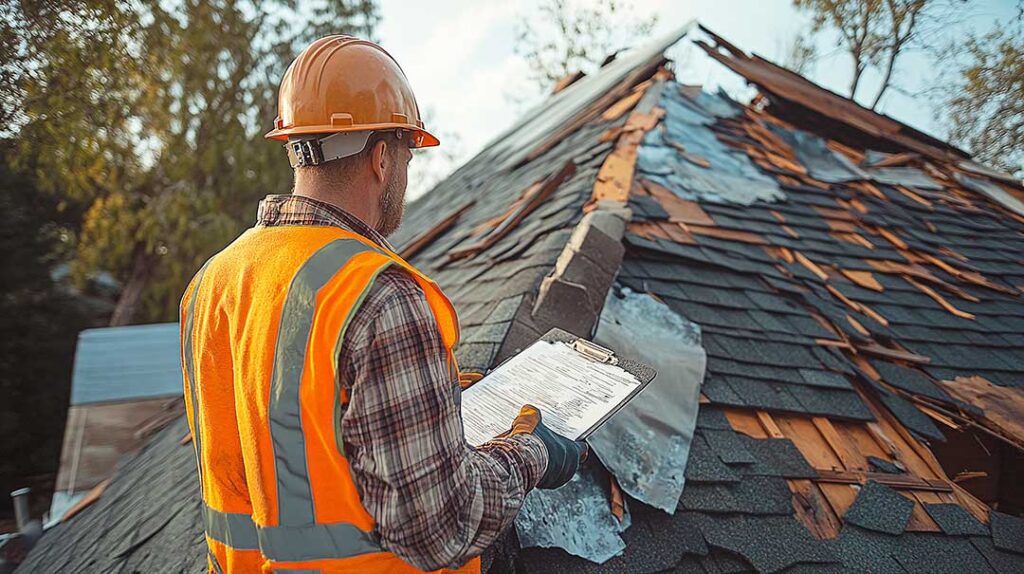
A roof rarely fails all at once. More often, aging materials become less reliable over several seasons, and small warning signs appear before water reaches the living space. For homeowners in Fishers, IN, knowing which signs indicate normal aging, repairable damage, or replacement-level deterioration can help prevent larger problems.
How long should a roof last?
Most asphalt shingle roofs last roughly 15 to 30 years, although actual service life depends on material quality, ventilation, installation, roof slope, tree exposure, storm damage, and maintenance. A roof that is approaching the upper end of its expected life deserves closer attention even if it has not leaked.
Other roofing materials can last longer. Metal, tile, slate, and some specialty systems may remain functional for several decades, but their flashing, underlayment, fasteners, and sealants can still deteriorate before the main roofing material does.
Age alone does not prove that replacement is necessary. It does, however, change how other symptoms should be interpreted. A few missing shingles on a relatively new roof may be a limited repair. Similar damage on an older roof may signal that the surrounding materials are also becoming brittle.
What visible signs suggest that replacement may be near?
The most useful inspection clues are changes across broad sections of the roof rather than one isolated defect. Common warning signs include:
- Shingles that curl upward, buckle, blister, or appear wavy
- Widespread granule loss, especially where dark patches are visible
- Cracked, torn, or missing shingles in several areas
- Exposed nail heads or deteriorated seal strips
- Sagging along a roof plane, ridge, or valley
- Damaged flashing around chimneys, vents, skylights, and roof-to-wall intersections
- Moss or algae covering large areas, particularly where moisture remains trapped
- Repeated repairs in the same locations
Granules in the gutters are another clue. A small amount may be normal after installation or a storm, but persistent accumulation can indicate that shingles are losing their protective surface.
A sagging roof is more serious than a cosmetic issue. It may point to wet decking, weakened framing, poor drainage, or long-term moisture exposure. People should avoid walking on a visibly sagging section.
Does a roof need replacement if it leaks?
Not necessarily. A single leak does not automatically mean the entire roof has reached the end of its life. Water may enter through damaged flashing, a failed vent boot, a puncture, or a small area of storm damage.
Replacement becomes more likely when leaks are recurring, appear in multiple areas, or occur alongside widespread shingle deterioration. Interior staining can also be misleading because water may travel along rafters or roof decking before appearing on a ceiling.
A ceiling stain should not be painted over until the source of the moisture has been identified and the affected materials have dried. Persistent dampness can contribute to damaged insulation, wood decay, and indoor air-quality concerns.
How does local weather affect roof life?
Homes in the area experience a mix of summer heat, heavy rain, strong thunderstorms, hail, freeze-thaw cycles, and winter snow. Central Indiana typically receives measurable snowfall during the colder months, while spring and summer storms can bring wind and hail that damage shingles without creating an immediate leak.
Freeze-thaw cycling can enlarge small cracks and loosen older sealants. Heavy rain tests flashing and drainage paths, while wind can lift shingle edges or break the adhesive bond. Hail damage may appear as random dark spots, bruising, or loss of granules.
After a severe storm, a roof can look acceptable from the ground while still having damaged seals or punctured shingles. Binoculars can help with a ground-level check, but climbing onto a roof introduces fall and surface-damage risks.
What interior signs should homeowners watch for?
Interior evidence often appears before a roof problem becomes obvious from the yard. Watch for:
- Brown or yellow ceiling stains
- Damp spots that appear after rain
- Peeling paint or bubbling drywall near the ceiling
- Musty odors in an attic or upper-floor room
- Wet insulation
- Daylight visible through roof decking
- Dripping around light fixtures, vents, or exterior walls
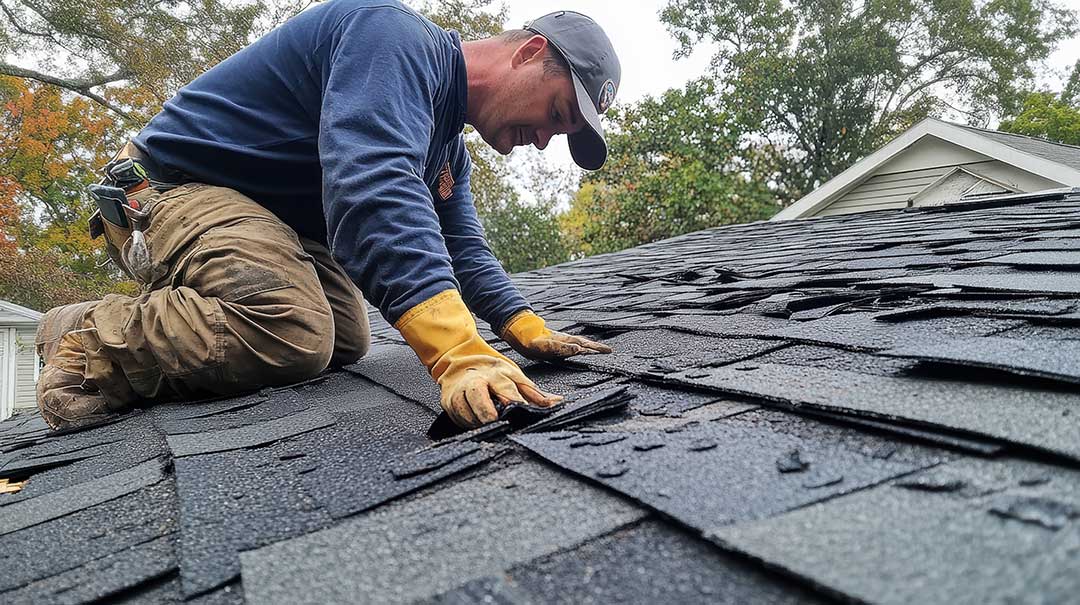
A stain that dries between storms still deserves attention. Intermittent leaks commonly occur around valleys, penetrations, flashing, and areas where wind-driven rain enters beneath shingle edges.
The attic is especially useful for checking roof condition. Look for water marks, darkened wood, mold-like growth, rusted fasteners, compressed insulation, and blocked or inadequate ventilation. Do not touch suspected electrical components or enter an attic with active water intrusion.
Can repairs extend the life of an older roof?
Repairs may be reasonable when the damage is localized and the remaining roofing material is in good condition. Examples include replacing a small number of wind-damaged shingles, repairing flashing, or replacing a failed plumbing vent boot.
Repairs are less dependable when shingles are brittle, multiple roof areas are failing, or the roof has already required repeated patching. New shingles may not seal properly to older surrounding materials, and color or texture differences can make repairs visible.
An important distinction is whether the problem affects the roof covering or the structure beneath it. Replacing surface materials does not correct rotten decking, damaged rafters, poor ventilation, or drainage problems. Those conditions need to be understood before deciding between another repair and full replacement.
Is an inspection needed before replacing a roof?
A careful evaluation is useful when the roof’s condition is uncertain, especially before a major storm-related decision or a home sale. The assessment should consider roof age, shingle condition, flashing, valleys, ventilation, decking, attic evidence, and the number and location of previous repairs.
Homeowners should also review applicable local permit requirements before beginning replacement work. Requirements can vary by project and property, and some work may require inspections or documentation.
Insurance coverage is a separate question from roof age. Policies commonly distinguish between sudden storm damage and deterioration caused by wear, poor maintenance, or age. Photographs taken before and after major storms can create a useful record, but coverage decisions depend on the policy and the documented cause of damage.
When is replacement the safer choice?
Replacement is generally worth serious consideration when several of these conditions occur together:
- The roof is near or beyond its expected service life
- Shingles are deteriorating across large areas
- Leaks recur after repairs
- The roof deck or framing shows moisture damage
- Storm damage is widespread
- Flashing and penetrations are failing in multiple places
- Repair costs are becoming frequent or difficult to predict
- The roof no longer provides reliable protection during ordinary weather
The decision should be based on the roof’s overall condition rather than a single dramatic symptom. A sound roof with one isolated defect may need a targeted repair. An older roof with widespread deterioration may create more uncertainty and interior risk even when it has not yet developed a major leak.
For area households, seasonal roof checks are especially useful in spring and fall. Looking from the ground, checking attic conditions, clearing debris from drainage paths, and noting changes after major storms can reveal problems early—before a minor roofing issue becomes interior damage.