

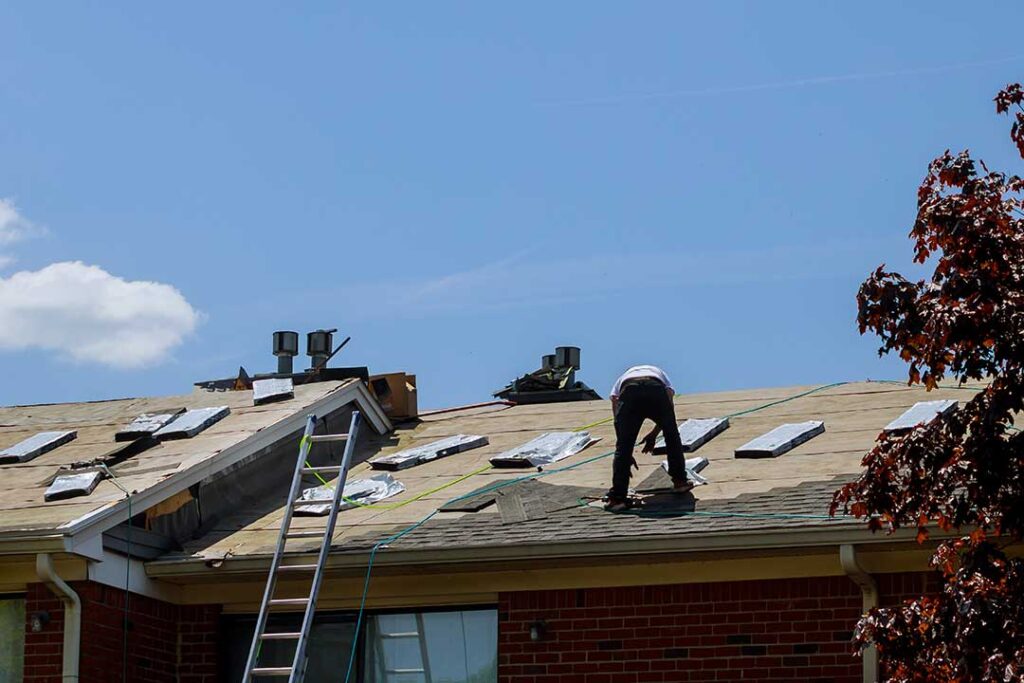
What is the safest way to clean a roof in Fishers, IN?
The safest roof-cleaning method is usually a low-pressure approach that removes organic growth without scraping, walking unnecessarily on shingles, or using a high-pressure washer. For many asphalt-shingle roofs, that means applying an appropriate cleaning solution from a stable position and allowing time for the growth to loosen and break down.
Roof cleaning is not the same as roof replacement or repair. The goal is to remove algae streaks, moss, lichen, leaves, and surface dirt while preserving the shingles, flashing, gutters, siding, landscaping, and painted surfaces around the home.
In the local climate, roofs may collect moisture from spring rain, summer humidity, autumn leaves, and winter snow or ice. Shaded roof sections often remain damp longer, which encourages dark algae staining and moss growth.
Should a homeowner walk on the roof?
Walking on a roof creates avoidable safety and damage risks. Shingles can become brittle with age, slippery when wet, or loose around damaged areas. Even newer asphalt shingles may lose protective granules when stepped on repeatedly.
Avoid walking on the roof if:
- The surface is wet, icy, steep, or visibly deteriorated.
- Moss or algae makes the shingles slippery.
- The roof has loose shingles, exposed underlayment, sagging areas, or damaged flashing.
- A ladder would need to be placed on uneven ground or near overhead utility lines.
- The work would require leaning sideways, reaching beyond a stable position, or carrying heavy equipment.
A roof can often be inspected from the ground with binoculars or from a ladder positioned at the edge. Cleaning should not proceed if safe access cannot be maintained. Falls from residential roofs can cause severe injuries, and wet roof-cleaning work increases that risk substantially.
How should asphalt shingles be cleaned?
For asphalt shingles, use a product specifically labeled for roof algae, moss, or lichen, and follow the label instructions exactly. A common approach is to apply the solution gently with a low-pressure sprayer, let it dwell for the recommended amount of time, and allow rainfall to rinse away loosened growth.
Do not assume that stronger chemicals produce better results. Excessive concentration can damage shingles, corrode metal components, harm plants, and discolor siding. Household bleach should not be mixed with ammonia, acids, or other cleaners because dangerous fumes can form.
Before applying any solution:
- Protect or thoroughly wet nearby plants and shrubs.
- Move outdoor furniture, toys, grills, and other items away from runoff.
- Cover delicate plants temporarily if the product label permits it.
- Close windows and doors near the work area.
- Test a small, less visible section if the label recommends testing.
- Check where the runoff will travel.
A dark streak may fade gradually rather than disappear immediately. Moss and lichen can require additional time to release their attachment to the shingles. Scraping them off aggressively may remove granules and shorten roof life.
Why is pressure washing usually a bad idea?
Pressure washing can force water beneath shingles, loosen granules, strip away protective surface material, and damage flashing or ridge vents. It can also drive water into soffits, attic ventilation openings, wall assemblies, and areas around roof penetrations.
A roof that looks cleaner after pressure washing may still have hidden damage. Granule loss exposes the asphalt coating to faster weathering, while loosened shingles may not become visibly displaced until a later storm.
Low pressure does not mean spraying forcefully from close range. The nozzle should be kept at a safe distance, and the spray should never be aimed upward beneath shingle edges. For most homeowners, applying a suitable solution without rinsing aggressively is less damaging than trying to make the roof look immediately spotless.
How can moss and lichen be removed without harming shingles?
Moss should not be pulled or scraped off dry. Its root-like structures can be attached between shingle layers or around surface granules. Removing it by force may tear shingles or expose the underlayment.
A safer process is to:
1. Remove loose leaves and small debris from the roof edge or accessible areas without dragging tools across the shingles.
2. Apply a roof-safe treatment according to its label.
3. Allow the treatment to weaken the moss over time.
4. Let natural weather loosen remaining growth.
5. Remove only material that releases easily and safely.
If heavy moss has lifted shingle edges, cleaning alone may not correct the problem. Shingles that have curled, cracked, or separated may need evaluation before further work. Moss growth can also indicate persistent shade, poor drainage, clogged gutters, or branches that limit sunlight and airflow.
What safety precautions matter most?
Roof cleaning requires planning before any water or chemical is applied. Use sturdy footwear with slip-resistant soles, eye protection, gloves, and clothing that covers exposed skin. Keep children and pets away from the work area, including the ground beneath the roof edge.
Ladder safety is equally important:
- Set the ladder on firm, level ground.
- Keep it away from overhead electrical lines.
- Maintain three points of contact while climbing.
- Do not carry a full container or bulky sprayer while climbing.
- Never move or extend a ladder while standing on it.
- Avoid using a ladder during wind, lightning, or icy conditions.
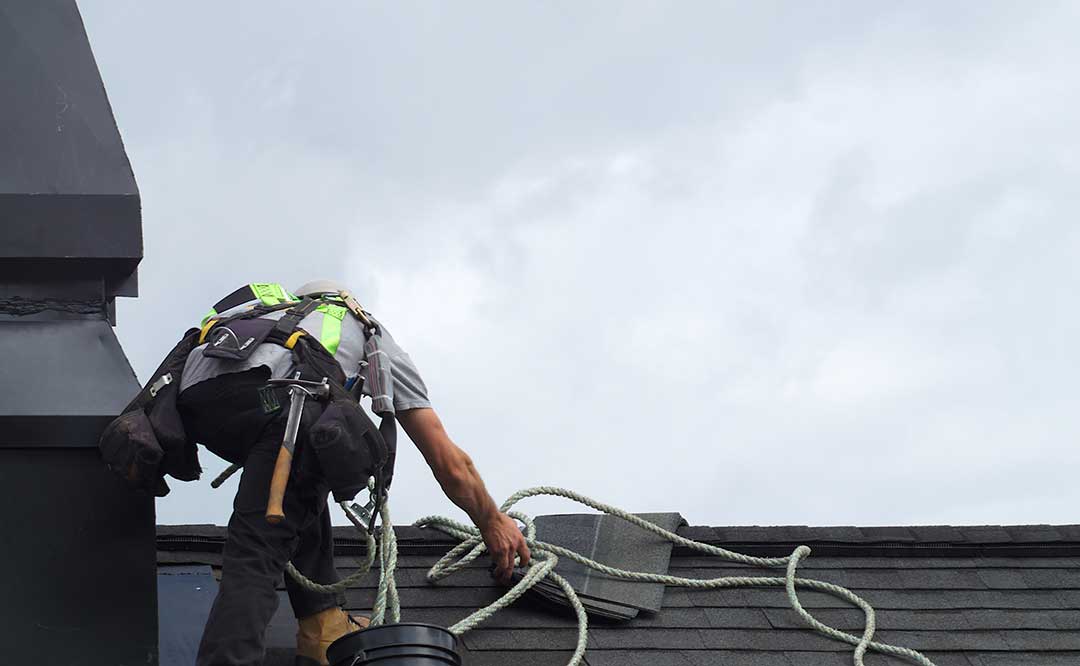
A second person can help monitor the ladder, manage hoses, and watch for runoff, but assistance does not make an unsafe roof surface safe to walk on.
How do you protect gutters, siding, and landscaping?
Cleaning solution can affect more than the roof. Runoff may discolor siding, damage sensitive plants, corrode gutter components, or leave residue on windows and decks.
Before starting, identify downspouts and temporarily redirect discharge away from flower beds, vegetable gardens, ponds, and areas where pets may walk. Keep rinsing water controlled rather than allowing it to flow across neighboring property or public walkways.
After cleaning, rinse affected siding, windows, gutters, and hard surfaces with clean water if the product label allows it. Inspect plants for signs of stress over the next several days. Avoid applying treatment during strong wind, extreme heat, or rain that could carry the solution beyond the intended area.
When should roof cleaning be postponed?
Postpone cleaning during rain, freezing temperatures, high winds, thunderstorms, or periods when the roof will remain wet for an extended time. Chemical treatments may not work as intended if they are diluted by immediate rainfall, while cold conditions can create dangerous ice on ladders and roof surfaces.
Cleaning should also be postponed if the roof has visible structural concerns, including:
- Sagging decking or roof lines
- Missing or widely displaced shingles
- Exposed underlayment
- Cracked or loose flashing
- Water stains or active leaks
- Damaged vents, chimneys, or skylight seals
These conditions involve repair or inspection rather than routine cleaning. Continuing may worsen the problem or conceal evidence of water entry.
How often does a roof need cleaning?
There is no universal schedule. A roof may need attention when algae streaks, moss, lichen, leaves, or accumulated debris become visible, especially in shaded or poorly ventilated sections.
A practical routine is to inspect the roof from the ground twice a year and after major storms. Clear leaves from accessible gutters and roof valleys without climbing onto unstable areas. Trim branches only when it can be done safely and without contacting utility lines.
Regular cleaning should not be used to compensate for drainage problems. Persistent growth may return if gutters overflow, downspouts discharge beside the foundation, tree cover keeps shingles damp, or attic ventilation allows excessive moisture buildup. Addressing those conditions can reduce the need for repeated roof treatments.